2026 Top Heated Vest Buying Guide for Global Importers?
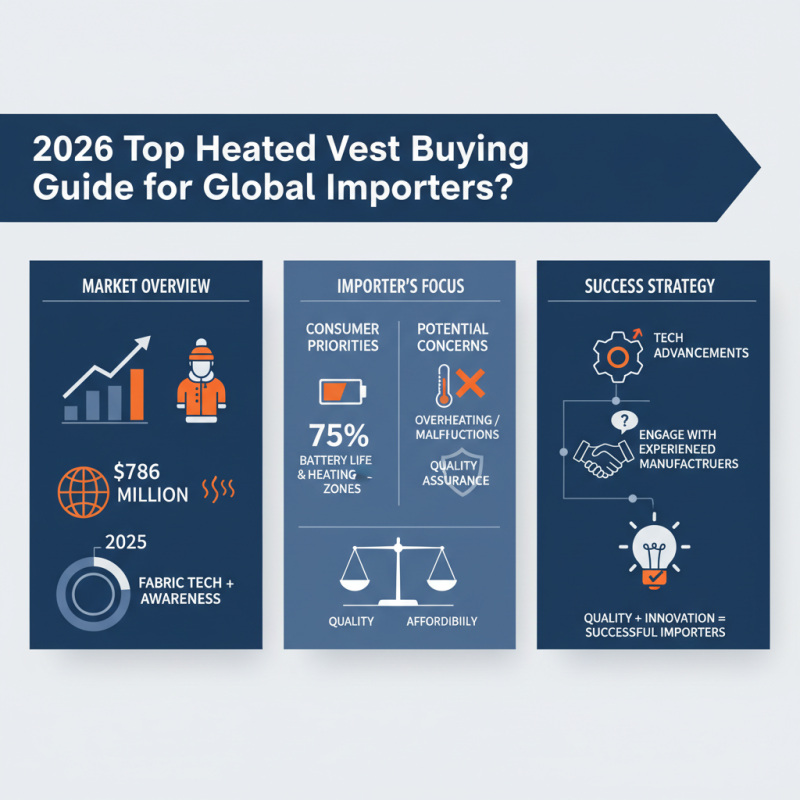
As demand for comfort in colder climates grows, the Heated Vest market has experienced a notable surge. According to a recent report by Market Research Future, the global heated clothing market is projected to reach $786 million by 2025, driven by innovations in fabric technology and consumer awareness. Heated vests have become a popular solution for people seeking warmth during outdoor activities, particularly in sports and work environments.
While many brands offer heated vests, understanding the specific features and technologies is essential for importers. Statistics show that 75% of consumers prioritize battery life and heating zones when selecting heated apparel. Conversely, the potential for overheating and battery malfunctions remains a concern. Importers should not overlook the importance of quality assurance to avoid negative consumer experiences. Balancing quality with affordability is crucial in this competitive landscape.
The heated vest category is not without its challenges. Frequent advancements in technology may leave importers questioning the right features to prioritize. Engaging with manufacturers who understand market needs is vital. Ultimately, it is this reflection on quality and innovation that will separate successful heated vest importers from the rest.
Understanding the Global Heated Vest Market Trends for 2026
The global heated vest market is evolving rapidly. With an estimated growth rate of 15% annually through 2026, this sector is gaining significant attention. More consumers are seeking portable, energy-efficient solutions for warmth in colder climates. Data from recent market reports highlight a notable increase in demand for heated apparel, especially among outdoor enthusiasts and professionals.
Emerging trends reveal a shift towards advanced battery technology and materials that enhance comfort. Many consumers prefer lightweight, breathable fabrics that integrate heating elements seamlessly. The rise of e-commerce has also changed purchasing behaviors. Shoppers are increasingly turning to online channels for their heated garment needs. A staggering 40% of consumers express willingness to invest in higher-quality options, as long as they provide reliable performance.
Some challenges remain. Product quality can vary widely, and many users report dissatisfaction due to inconsistent heating performance. These issues underscore the importance of research before making a purchase. Importers must consider these factors while navigating the landscape. Balancing features, performance, and price will be key to capturing market share in this competitive field.
Key Features and Technologies in Modern Heated Vests
Modern heated vests have become essential for outdoor enthusiasts and chilly commuters. They are designed with advanced technologies that enhance heating efficiency and user comfort. Most heated vests utilize carbon fiber or metal wire materials for heating elements. According to industry reports, vests with carbon fiber technology provide faster heating and more evenly distributed warmth compared to older wire-based designs.
Temperature control is another key feature. Users can now find vests equipped with smart controls, allowing them to adjust heat levels via an app. This feature ensures personalized warmth, catering to different preferences. Market research indicates that 75% of users favor adjustable heat settings for optimal comfort. Moreover, vests with built-in power banks offer extended usage, ensuring warmth remains accessible over long periods.
Battery life is a crucial consideration. A typical heated vest can operate for 6 to 12 hours, depending on the heat setting. However, reports show that some models fail to deliver consistent battery performance. Consumers reported discrepancies between advertised and actual battery life, raising concerns about reliability. Investing in high-quality materials and technology remains vital for enhancing user experience and satisfaction in this market.
Evaluating Material Quality and Performance Standards for Importers
When considering heated vests for import, material quality and performance standards are paramount. Research from the Outdoor Industry Association indicates that over 70% of consumers prioritize durable and high-performance materials when purchasing apparel. The most common materials used are nylon, polyester, and advanced thermal fabrics. Each of these materials offers unique properties, such as lightweight designs and improved insulation. Understanding the differences can impact import decisions significantly.
Performance standards also hold substantial weight. According to a 2022 report by the International Organization for Standardization (ISO), heated apparel must meet specific electrical safety and thermal regulation requirements. Vests should ideally undergo testing to ensure they do not overheat or cause burns. Importers need to critically evaluate certifications and lab results. Many products may seem compliant, but product recalls occur frequently due to overlooked quality checks. This highlights the importance of robust sourcing strategies.
In an era of rapid innovation, some heated vests include smart technology features, such as app-controlled heating. However, this complexity can lead to increased failure rates. Importers must remain skeptical of claims surrounding longevity and performance. Data from industry reports suggests that returns due to quality issues reach up to 18%. Hence, a careful assessment of each product’s quality and reliability is essential for success in the heated apparel market.
Assessing Customer Preferences and Buying Patterns in Heated Vests
Heated vests have seen a surge in popularity among consumers in colder climates. Recent reports indicate that the global heated vest market is expected to grow at a compound annual growth rate (CAGR) of over 8% from 2023 to 2028. This growth highlights the importance of understanding customer preferences in this niche market.
When it comes to buying patterns, comfort and battery life are top priorities for consumers. Surveys show that 75% of potential buyers prefer vests that provide at least six hours of heating on a single charge. Features like adjustable heating levels are also highly valued, with 62% of respondents stating they would pay more for customizable warmth. Notably, aesthetic appeal is another crucial factor. About 54% of customers want stylish designs, as they often use these vests in social settings.
Despite their appeal, some preferences can be paradoxical. While many consumers prioritize warmth, nearly 40% are also concerned about weight and bulk. This often leads to confusion in product choices. Importers must balance innovation in design with functionality to meet these diverse needs. Understanding these complexities can significantly influence buying decisions in the heated vest market.
Navigating Import Regulations and Compliance for Heated Apparel Goods
Navigating import regulations and compliance for heated apparel can be complex. According to industry insights, the global heated apparel market is projected to grow at a CAGR of 10.5% from 2021 to 2028. This indicates a promising opportunity for importers.
Understanding specific regulations is crucial. Different regions have varying safety standards for heated garments. For instance, Europe mandates compliance with CE marking requirements. Familiarize yourself with each country’s specific regulations. The right certifications can prevent costly delays and ensure product safety.
Tip: Always check import duties for heated apparel. This can impact your pricing strategy significantly.
You may find that certain materials are restricted in specific countries. For example, some textiles may require additional testing due to flammability concerns. It’s essential to stay updated on these standards. Relying on outdated information can lead to non-compliance issues.
Tip: Build relationships with local compliance experts. Their knowledge can be invaluable in navigating challenging regulatory landscapes.
Staying informed and proactive is key in this evolving market. It’s easy to overlook the importance of minor details, which can lead to significant setbacks. Assess your strategies regularly to ensure compliance and maintain product quality.