Top Canvas Tote Bag Manufacturers in China for Bulk Orders
Bulk orders of Canvas Tote Bags look simple on paper. In production, small decisions shape the result: canvas weight, handle stitching, print placement, and carton packing. A bag may look sturdy in a product photo, then feel thin when loaded with books. That gap matters to retailers, event teams, and promotional buyers. W. Edwards Deming, a quality-management expert whose principles apply to sewn-goods production, said, “Quality is everyone’s responsibility.” For buyers, that means checking more than a sample’s appearance. Ask how the factory controls fabric consistency, sewing strength, color matching, and inspection across a full run.
China offers a broad supplier base, from specialized tote workshops to larger manufacturers with printing and packing capabilities. Still, a factory’s stated capacity does not guarantee consistent results. Request recent production photos, confirm sample specifications in writing, and compare lead times against your order quantity. Check details such as seam reinforcement, handle length, fabric weight, and tolerance for print variation. A clear brief helps both sides. It does not prevent every mismatch.
This guide introduces manufacturers suited to bulk orders and explains what buyers should verify before choosing a partner. Use the profiles as a starting point, not a final endorsement; capabilities and service can change. A shortlist is never perfect. Inspect samples, clarify quality checks, and confirm production terms before committing.
What Defines a Canvas Tote Bag Manufacturer for Bulk Orders
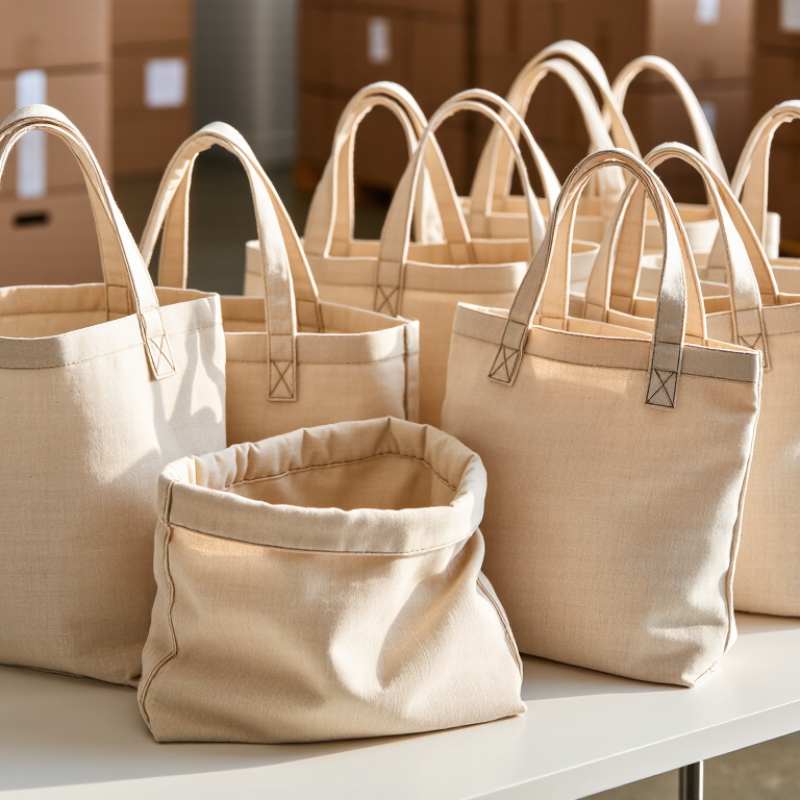
A canvas tote bag manufacturer for bulk orders is defined by repeatable control, not simply a large sewing floor. The supplier should confirm fabric weight, weave, handle length, stitching method, and finished dimensions before sampling. A physical sample helps buyers check whether a loaded bag sags, twists, or feels rough at the seams. Small details matter. Even a slight handle-length difference can make a large shipment look inconsistent.
Reliable production depends on documented specifications and checks at several stages. Ask how fabric shade, print placement, seam strength, and packing quantities are inspected. Request a production schedule with clear approval points, and confirm how defects or short shipments are recorded. A capable manufacturer should explain its minimum order, monthly capacity, and lead time in practical terms. Be cautious of confident promises without sample records or measurable quality criteria. I would still recheck the first production batch; a good sample does not guarantee every carton matches.
Tips: Send a reference sample and a written measurement sheet. Confirm carton counts, bag weight, and labeling before production. Keep one approved sample for comparison when the order arrives.
China’s Canvas Bag Production Regions and Capabilities
China’s canvas bag production is concentrated across several coastal manufacturing areas, with different strengths from one factory to another. In Jiangsu and Zhejiang, buyers may find established textile and sewing supply networks. Guangdong often offers access to varied trims, printing, and finishing services. These are broad patterns, not guarantees; individual workshops can differ sharply.
Some suppliers handle cutting, stitching, and packing under one roof. Others rely on nearby partners for fabric dyeing, screen printing, or embroidery. That can affect lead times. Ask where each step happens. A production visit or a clear process sheet can reveal more than a polished catalogue.
For bulk orders, request a sample made with the intended canvas weight, handle length, and print method. Check the seams by pulling gently, and inspect how the bag sits when filled. Small details matter. A tidy sample does not always predict a consistent production run, which is easy to overlook. Confirm inspection points, acceptable color variation, and packing requirements before approving the order. Region gives useful context, but documented checks and direct communication are stronger signs of production fit.
China’s Canvas Bag Production Regions and Capabilities
A qualitative comparison of established manufacturing clusters and their general strengths. Scores are an ordinal overview, not official production or capacity statistics.
Regional strengths are summarized at a broad cluster level; capabilities vary by supplier and should be verified during sourcing.
Leading Chinese Manufacturers and Their Product Specialties
China’s tote-bag manufacturers often specialize by material and production process. Some focus on heavy cotton canvas, with reinforced handles and dense stitching for grocery or retail use. Others offer lighter cotton blends, printed panels, or laminated interiors for promotional orders. In coastal manufacturing areas, buyers can often find suppliers combining fabric sourcing, cutting, sewing, and printing. Capabilities still vary from factory to factory.
Material selection deserves close attention. Textile Exchange’s 2024 Materials Market Report estimates that global fiber production reached 124 million tonnes in 2023. That figure does not measure tote-bag demand, but it shows why buyers should ask for clear fiber specifications and supporting documentation. For bulk orders, request a pre-production sample and check its weight, handle length, seam strength, and print alignment. Small differences matter. A sample can look excellent while production pieces vary; I would not skip random carton inspections.
Manufacturers specializing in recycled or organic-fiber fabrics may suit buyers with specific sourcing requirements, while standard canvas suppliers can offer more color and weight options. Ask whether fabric is dyed before cutting, and how shade variation is controlled across batches. Confirm minimum order quantities, lead times, and packaging details in writing. A few careful questions can prevent a pallet of bags with twisted handles or uneven hems.
How to Compare Suppliers on Quality, Customization, and Price
Compare Chinese canvas tote suppliers using one identical specification sheet. Set fabric weight, finished dimensions, handle length, stitching, print method, and packaging before requesting quotes. Ask for a pre-production sample, then check seam strength, color transfer, and measured dimensions. Not just appearance. A neat sample may hide uneven stitching or fabric variation across a production run.
Material claims deserve scrutiny. Textile Exchange’s Materials Market Report 2024 estimates that global fiber production reached 124 million tonnes in 2023, with polyester accounting for about 57%. For cotton or recycled-fiber bags, request the material composition and supporting documents; do not treat a label alone as proof. A useful sample test includes loading the bag with a stated weight and checking the handles after repeated lifting. It is simple, but not a full laboratory test.
Compare customization and price on equal terms. Confirm print colors, artwork setup fees, woven labels, minimum order quantities, sample charges, and lead times. Request a written quote for the same quantity and delivery terms from each supplier. Separate unit price from freight, packing, and any tooling costs. One offer may look cheaper. It may also omit a cost. I would still compare the final sample against the approved specification, since small changes in fabric weight or handle construction can be easy to miss.
Bulk Order Planning: Samples, Compliance, and Shipping
For bulk canvas tote orders, treat the sample as a production checkpoint, not a photo prop. Request one made with the planned canvas weight, weave, handle length, stitching, and print method. Measure the bag and handle drop, then carry a filled sample for ten minutes. Small details matter. Record approved tolerances in writing; “same as sample” can still mean different things to different teams.
Before production, request material composition, colorfastness, seam-strength, and restricted-substance test records relevant to the destination market. Check the laboratory and report scope: a test for one fabric may not cover another dye lot. Compliance needs traceability. The World Bank’s 2023 Logistics Performance Index assessed logistics across 139 countries, using indicators such as customs, tracking, and timeliness. Use these areas to question a supplier’s shipping plan, not as a guarantee of delivery.
Build shipping time into the order calendar. UNCTAD’s Review of Maritime Transport 2024 reports that maritime trade volume grew 2.4% in 2023 and projected 2% growth for 2024. Freight schedules can shift. Ask for carton dimensions, gross weights, packing photos, and the booking cutoff before final payment. Allow time for inspection and port delays. I would still treat any delivery estimate as a target, not a promise.