
How to Choose Summer Dresses for Your Store?
Choosing summer dresses for your store requires more than selecting bright colors and lightweight fabrics. Customers want comfort, flattering shapes, easy care, and value they can understand quickly.
The State of Fashion 2025, published by McKinsey & Company and The Business of Fashion, describes a cautious market shaped by slower growth and more selective shoppers. That finding matters for seasonal buying. Retailers should study sell-through rates, local weather, customer age, and return reasons before placing large orders. A linen-blend midi may suit a warm coastal market, while a breathable cotton mini could perform better in younger urban neighborhoods. Small details matter. Check lining, pocket depth, shrinkage, and transparency under direct sunlight.
Diane von Furstenberg, creator of the iconic wrap dress, once said, “Feel like a woman, wear a dress.” Her statement highlights the emotional value behind the category. Summer dresses should not only look attractive on a hanger. They should help customers move comfortably through workdays, holidays, and outdoor events. However, no report can predict every local preference. That is where careful testing becomes essential. Start with a controlled assortment, review weekly sales, and adjust colors or sizes before the season peaks. Some choices will miss. That is normal, but ignoring the evidence is expensive. This guide explains how to balance trend awareness, product quality, pricing, and practical store data when building a stronger summer dresses assortment.
Define Your Store’s Summer Dress Customer and Market Position
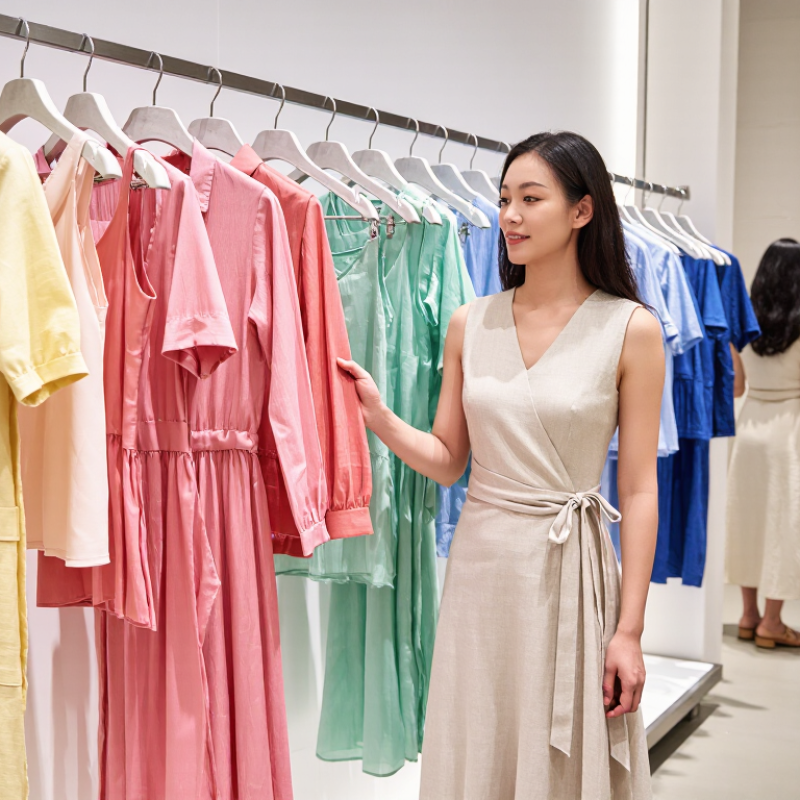
Choosing summer dresses starts with defining the customer, not selecting colors. A store serving university students needs breathable fabrics, easy washing, and prices that tolerate frequent wear. A boutique targeting professionals may need polished midi lengths, subtle prints, and stronger construction. Walk through your sales floor. Which customers touch linen? Which lengths stay on the rack?
Market position must be measurable. The McKinsey–BoF State of Fashion 2025 describes fashion growth as low and consumers as increasingly value-conscious. That supports a clear good-better-best price structure, rather than an unfocused collection. Euromonitor International’s Apparel and Footwear 2024 research also highlights demand for comfort, versatility, and responsible purchasing. Translate that into dresses with adjustable straps, pockets, lining, and fabric details customers can understand. Useful details matter.
Keep the assortment narrow enough to learn. Test six silhouettes across two price levels, then review sell-through weekly. Track returns by size, fabric complaints, and repeat purchases. A lightweight cotton dress may look perfect online, yet shrinkage can damage trust. Check wash testing before ordering deeply. I have seen attractive prints underperform because they suited the buyer’s taste, not the store’s customer. That mistake is expensive. Leave room to revise. Summer demand is not identical across regions, ages, or climates. Use local weather, search data, customer interviews, and your own transaction reports beside published research. Industry reports provide direction, not certainty.
How to Choose Summer Dresses for Your Store? - Define Your Store’s Summer Dress Customer and Market Position
| Customer Segment | Typical Age | Primary Summer Need | Main Buying Occasion | Preferred Dress Length | Preferred Materials | Common Silhouettes | Target Retail Price | Recommended Color Direction | Recommended Size Depth | Suggested Inventory Mix | Market Position |
|---|---|---|---|---|---|---|---|---|---|---|---|
| Value-Conscious Everyday Shopper | 18–34 | Lightweight, easy-care dresses for frequent wear | Daily errands, casual outings, travel | Mini and knee length | Cotton blends, viscose, lightweight jersey | T-shirt, tank, shirt dress, relaxed fit | US$25–49 | White, black, navy, soft pink, seasonal prints | S–XL; deepest stock in M and L | 50% core basics, 30% prints, 20% trend styles | Affordable, practical, high-turnover |
| Modern Office and Hybrid-Work Customer | 25–44 | Polished styles that transition from work to evening | Office, meetings, dinners, business travel | Midi and knee length | Linen blends, woven viscose, cotton poplin | Wrap, shirt dress, fit-and-flare, column | US$55–99 | Navy, cream, olive, light blue, restrained stripes | XS–XXL; balanced depth from S to XL | 45% neutrals, 35% soft colors, 20% prints | Accessible contemporary and versatile |
| Occasion and Event Shopper | 24–45 | Noticeable dresses with a refined finish | Weddings, parties, graduations, summer events | Midi and maxi length | Satin, chiffon, textured viscose, lace details | One-shoulder, bias-cut, tiered, draped waist | US$79–149 | Coral, emerald, cobalt, lavender, floral prints | XS–XL; emphasize M and L with selected XXL | 35% solid colors, 40% prints, 25% statement details | Event-focused, elevated, occasion ready |
| Resort and Travel Customer | 28–55 | Breathable packing-friendly pieces with vacation appeal | Beach holidays, cruises, resort travel | Midi and maxi length | Linen, cotton voile, rayon, lightweight gauze | Slip, tiered maxi, kaftan-inspired, relaxed wrap | US$65–129 | Natural white, turquoise, terracotta, tropical prints | S–XL; include adjustable and relaxed-fit options | 40% solid colors, 35% prints, 25% cover-up styles | Comfort-led resort and travel edit |
| Modest and Coverage-Focused Customer | 25–55 | Cool, comfortable coverage without sacrificing style | Work, family gatherings, religious or cultural events | Midi and maxi length | Cotton poplin, linen blends, opaque viscose | Long-sleeve shirt, high-neck midi, tiered maxi | US$49–109 | Black, sand, dusty rose, deep green, small-scale prints | S–XXL; ensure consistent coverage across sizes | 45% midi, 35% maxi, 20% layering-friendly styles | Comfortable, covered, dependable quality |
| Plus-Size and Fit-First Customer | 25–50 | Reliable fit, comfort, support, and flattering proportions | Everyday wear, work, social occasions | Knee, midi, and maxi length | Stretch cotton, ponte, viscose blends, breathable knits | Wrap, A-line, empire waist, fit-and-flare | US$49–119 | Jewel tones, black, navy, warm neutrals, medium-scale prints | XL–5XL; maintain real depth rather than limited samples | 35% core solids, 35% prints, 30% occasion and statement styles | Fit-first, inclusive, comfort-driven |
| Trend-Led Young Customer | 16–28 | Fashion-forward silhouettes suitable for social content | Festivals, nightlife, holidays, social events | Mini and asymmetrical midi | Mesh layers, jersey, denim, satin, lightweight cotton | Cut-out, ruched, body-skimming, halter, bubble hem | US$29–79 | Lime, cherry red, butter yellow, metallic accents, bold prints | XXS–XL; smaller quantities with rapid replenishment | 25% basics, 50% trend pieces, 25% occasion styles | Trend-responsive, expressive, accessible |
Related Posts
-
How to Choose the Perfect Women's Jeans for Every Body Type?
-

How to Choose the Best Shirts for Women in Global Markets?
-
10 Essential Tips for Choosing the Perfect Womens Pants
-
10 Essential Tips for Choosing Stylish Shirts for Women
-
Top 10 Day Dresses Every Buyer Should Consider?
-
Top Cover Ups in Fashion Trends What You Need to Know?