
Top 10 Women's Jeans Suppliers for Global Buyers
Global buyers are rethinking how they source women’s jeans. Fit, fabric performance, price, and traceability now influence every supplier decision. Grand View Research valued the global denim jeans market at approximately USD 79.6 billion in 2023. It also projects steady growth through 2030. This expansion creates opportunity, but it increases sourcing pressure.
The suppliers featured in this guide were considered through practical buying criteria. These include production capacity, minimum order quantities, sampling speed, wash development, export experience, and quality controls. Buyers should also examine factory audits, fiber documentation, wastewater practices, and labor policies. Textile Exchange reported that cotton represented about 22% of global fiber production in 2023. That figure makes responsible cotton sourcing especially relevant for women’s jeans manufacturers. Small details matter. A waistband can twist. A dark wash can bleed. A size chart can mislead.
Adriano Goldschmied, widely known as the “Godfather of Denim,” said, “Denim is the only fabric that gets better with age.” His observation highlights durability, comfort, and product character. Yet durability should be tested, not assumed. A polished website proves little. This list is a starting point, not a guarantee. Buyers still need independent inspections, verified certifications, fit testing, and clear commercial terms. The strongest women’s jeans suppliers combine design flexibility with consistent production. They also communicate honestly when a development request is difficult. Mistakes happen. Hidden risks are harder to repair.
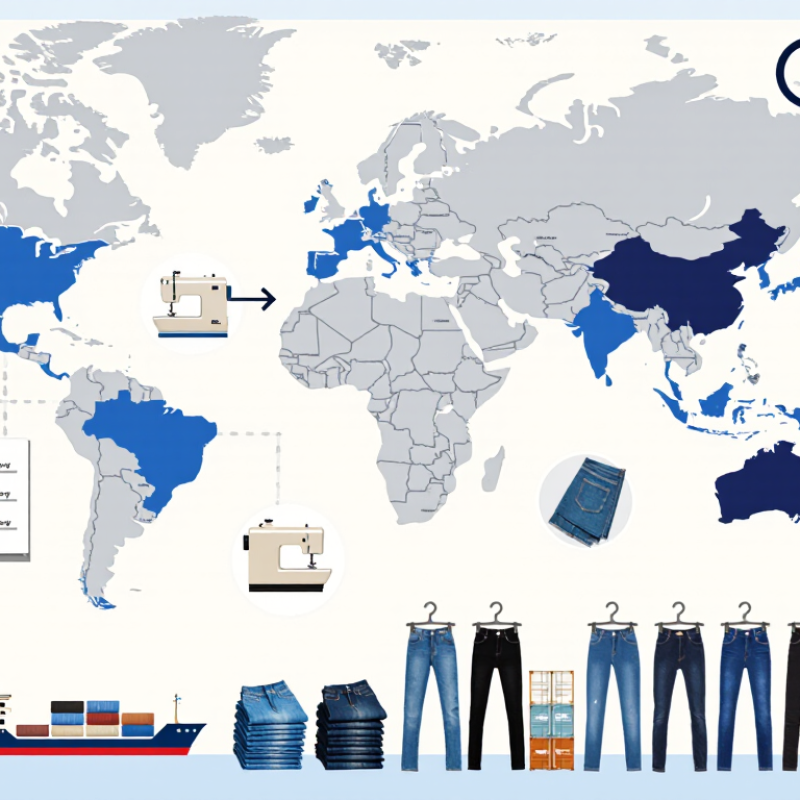
Defining the Global Women’s Jeans Supplier Market
Defining the Global Women’s Jeans Supplier Market
The global women’s jeans supplier market is no longer defined by factory capacity alone. Buyers now compare fit development, fabric traceability, order flexibility, and response speed. A supplier may produce thousands of pairs monthly, yet still fail on pocket placement or waistband comfort.
In sourcing reviews, I examine sample measurements, stitching density, wash consistency, and fabric recovery. These details matter after repeated wear. A dependable supplier should provide clear size charts and test reports. They should also explain shrinkage after washing, because a two-centimeter change can damage retail consistency. Small details matter.
Price remains important, but the lowest quote can create expensive problems. Delayed approvals, uneven dye lots, and unclear production updates weaken buyer confidence. Strong suppliers usually maintain organized sampling rooms and documented quality checks. They also adapt patterns for different body shapes instead of repeating one standard block. That approach is practical, but not flawless. I have seen excellent samples followed by inconsistent bulk production. A single inspection cannot prove long-term reliability. Buyers need ongoing communication, realistic lead times, and independent checks when order value is high. The market is competitive. Trust still takes time.
| Rank | Supplier Profile | Primary Manufacturing Region | Estimated Annual Jeans Capacity | Typical MOQ per Style/Color | Typical Production Lead Time | Core Women's Jeans Capabilities | Common Compliance Options | Export Market Coverage | Indicative FOB Price Range | Best Fit for Global Buyers |
|---|---|---|---|---|---|---|---|---|---|---|
| 1 | Supplier Profile A Large-scale exporter |
China | 1.5–3.0 million pieces | 500–1,000 pieces | 60–90 days | Stretch denim, wide-leg, skinny, straight-leg, cargo, and fashion washes | OEKO-TEX® fabric options, BSCI/SMETA-style social audits, ISO-based quality systems | North America, Europe, Australia, Middle East, and Southeast Asia | US$7–16 per pair | Retailers requiring broad product development and flexible fabric sourcing |
| 2 | Supplier Profile B High-volume basics |
Bangladesh | 1.0–2.5 million pieces | 1,000–3,000 pieces | 75–110 days | Basic five-pocket jeans, high-rise fits, stretch denim, and uniform programs | WRAP, BSCI, SEDEX/SMETA, and buyer-specific chemical-management programs | European Union, United Kingdom, North America, and Australia | US$6–13 per pair | Large retail programs focused on competitive pricing and repeat orders |
| 3 | Supplier Profile C Integrated denim mill partner |
Pakistan | 800,000–2.0 million pieces | 500–1,500 pieces | 65–100 days | Rigid and comfort-stretch denim, enzyme wash, stone wash, laser effects, and private-label development | OEKO-TEX® options, BSCI/SMETA-style audits, wastewater and chemical-control programs | Europe, North America, the Middle East, and South Asia | US$6–14 per pair | Buyers seeking denim-fabric access and competitive vertically coordinated production |
| 4 | Supplier Profile D Premium fashion production |
Turkey | 300,000–1.2 million pieces | 300–800 pieces | 45–75 days | Premium denim, tailored fits, vintage washes, embroidery, embellishment, and small-batch sampling | GOTS or recycled-fiber options, OEKO-TEX®, BSCI/SMETA, and ISO 9001-style systems | European Union, United Kingdom, North America, and nearby markets | US$10–24 per pair | Fashion brands prioritizing speed, finish quality, and proximity to Europe |
| 5 | Supplier Profile E Technical denim specialist |
Vietnam | 500,000–1.5 million pieces | 500–1,500 pieces | 60–95 days | Performance stretch, sculpting denim, recycled fibers, clean finishes, and contemporary silhouettes | HIGG-style facility assessments, WRAP, BSCI/SMETA, and restricted-substance testing | North America, Europe, Japan, South Korea, and Australia | US$8–18 per pair | Brands seeking technical fabrics and diversified Asian sourcing |
| 6 | Supplier Profile F Flexible mid-volume partner |
India | 250,000–900,000 pieces | 300–1,000 pieces | 55–90 days | Organic cotton options, artisan details, denim dresses, jeans, jackets, and capsule collections | GOTS, BCI/Better Cotton sourcing options, SA8000-style systems, and OEKO-TEX® fabrics | Europe, North America, Australia, and the Middle East | US$8–20 per pair | Emerging labels needing design flexibility and moderate order quantities |
| 7 | Supplier Profile G Cost-efficient export factory |
Egypt | 300,000–1.0 million pieces | 500–1,500 pieces | 60–100 days | Cotton-rich denim, classic fits, stretch jeans, workwear-inspired styles, and private-label basics | WRAP, BSCI/SMETA-style audits, cotton traceability, and buyer-required product testing | Europe, the Middle East, North America, and Africa | US$7–15 per pair | Buyers looking for Mediterranean and regional supply-chain diversification |
| 8 | Supplier Profile H Nearshore North American option |
Mexico | 200,000–800,000 pieces | 300–1,000 pieces | 35–70 days | Stretch jeans, workwear denim, basic five-pocket styles, wash development, and replenishment programs | WRAP, SMETA-style audits, CTPAT-related supply-chain controls, and customer testing requirements | United States, Canada, Latin America, and selected European markets | US$9–20 per pair | North American buyers valuing shorter transit times and regional replenishment |
| 9 | Supplier Profile I Volume-focused Asian factory |
Cambodia | 500,000–1.5 million pieces | 1,000–3,000 pieces | 70–110 days | Basic and mid-market women's jeans, elasticated waists, stretch denim, and standardized washes | WRAP, Better Work-style programs, BSCI/SMETA, and buyer-specific environmental audits | European Union, United Kingdom, North America, Japan, and Australia | US$6–13 per pair | High-volume buyers with established specifications and repeat seasonal orders |
| 10 | Supplier Profile J European nearshore specialist |
Tunisia | 150,000–700,000 pieces | 200–800 pieces | 45–80 days | Fashion washes, premium finishing, stretch denim, small-batch collections, and rapid sampling | OEKO-TEX® fabric options, BSCI/SMETA-style audits, ISO-based quality management, and product testing | European Union, United Kingdom, North Africa, and selected Middle Eastern markets | US$9–21 per pair | European buyers seeking shorter lead times and lower minimum order quantities |
Related Posts
-
How to Source Plus Size Clothing Wholesale?
-
Top Trends in Women's Shoes for Every Occasion and Style Choices?
-

10 Essential Tips for Choosing the Perfect Womens Pants
-
10 Essential Tips for Choosing Stylish Shirts for Women
-
2026 Best Formal Dresses to Elevate Your Special Occasions?
-

What Is Shop Clothing for Global Buyers?