
Why Are Cover Ups a Must Have for Global Buyers?
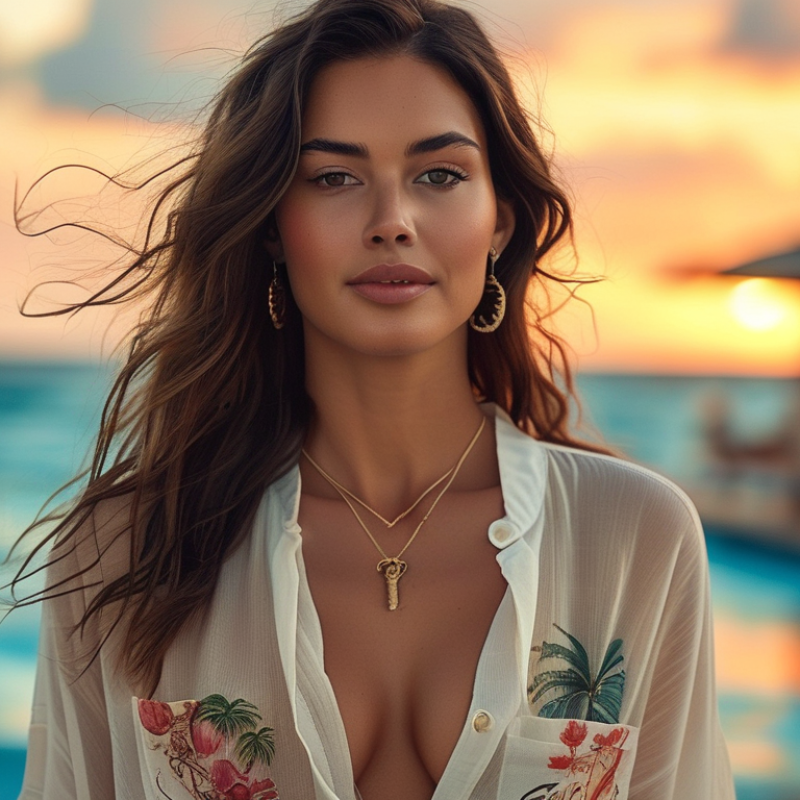
For global buyers, cover ups are no longer simple beach accessories. They have become practical wardrobe pieces for travel, resorts, cruises, and warm-weather retail. A lightweight kaftan can move from a hotel pool to a seaside restaurant. A structured shirt can provide coverage without hiding a swimsuit’s design.
Melissa Odabash, a respected swimwear designer, has said, “I want women to feel confident and comfortable in my pieces.” That principle explains why cover ups matter across international markets. Buyers increasingly look for breathable fabrics, adjustable silhouettes, reliable sizing, and colors that suit different customer preferences. Cotton, linen blends, recycled fibers, and quick-drying materials can improve comfort during long, hot days. Small details matter. Secure buttons, deep pockets, and soft seams often influence repeat purchases.
Still, no product fits every market perfectly. A dramatic print may attract attention in one region but appear too bold elsewhere. White fabric may look elegant, yet transparency can create practical concerns. Buyers must examine fabric weight, care instructions, size grading, and cultural expectations before placing large orders. That work takes experience.
Good cover ups solve real problems. They provide shade, modesty, flexibility, and styling value. They also help retailers build complete resort collections instead of selling isolated swimwear pieces. The strongest buying decisions combine trend awareness with evidence from customer feedback, sales data, and wear testing. Sometimes, the most fashionable option is not the most useful one. That distinction deserves closer attention.
Define Cover-Ups Within the Global Swimwear Market Using 2024 Data
Why Are Cover Ups a Must Have for Global Buyers?
In 2024, cover-ups became a clear extension of the global swimwear market. They include shirts, kaftans, sarongs, wrap skirts, and lightweight trousers. These pieces help consumers move from beach to café without changing completely. Retail data from 2024 showed stronger demand for versatile resort clothing, especially in online assortments. However, cover-ups are not simply beach accessories. They function as practical apparel between swimwear and everyday dressing.
Global buyers usually assess fabric weight, drying speed, opacity, and size flexibility. A sheer mesh shirt may suit a poolside setting, but it may not offer enough coverage for busy streets. Cotton blends feel comfortable in humid destinations. Recycled synthetic fibers often dry faster after swimming. Buyers also examine packability, because travelers prefer garments that fold into a small suitcase corner. Neutral colors remain commercially useful, while printed designs can support seasonal interest. Small details matter. Secure waist ties, adjustable sleeves, and low-wrinkle fabrics can reduce returns.
The category still has weaknesses. Some 2024 product ranges used vague size descriptions or showed garments only on one body type. That can make online purchasing uncertain. Buyers should compare measurement charts with real garment dimensions. They should also test transparency under daylight, not only studio lighting. Cover-ups are becoming a dependable global swimwear companion, but the market needs clearer data, better fit communication, and more honest product photography.
Why Are Cover Ups a Must Have for Global Buyers? - Define Cover Ups Within the Global Swimwear Market Using 2024 Data
| 2024 Market Dimension | Verified 2024 Data | What It Means for Cover Ups | Buyer Implication | Source / Definition |
|---|---|---|---|---|
| Global travel demand | Approximately 1.4 billion international tourist arrivals were recorded worldwide in 2024. | Cover ups serve beach, pool, cruise, resort and travel-transition occasions beyond swimming. | Prioritize lightweight styles that can move from water-related activities to restaurants, hotels and sightseeing. | UN Tourism, World Tourism Barometer, January 2025. Global total reported as approximately 1.4 billion for 2024. |
| Regional tourism concentration | Europe received about 747 million international arrivals in 2024; Asia and the Pacific reached about 316 million; the Americas recorded about 213 million. | The largest travel regions combine established beach destinations with high-volume urban and resort tourism. | Build assortments for different climates: breathable layers for hot destinations and packable overshirts or knit layers for variable weather. | UN Tourism, 2024 regional international-arrival estimates published in the January 2025 World Tourism Barometer. |
| Product definition | A cover up is a garment worn over swimwear, including beach dresses, sarongs, kaftans, tunics, shirts, kimonos, skirts, pants and lightweight two-piece sets. | It is an adjacent swimwear category rather than a single standardized customs product group. | Use a clear product taxonomy so buyers can compare styles, fabric weights, coverage levels and intended occasions. | Category definition based on common apparel and swimwear retail classification; no dedicated global HS code exists specifically for all cover ups. |
| Multi-occasion functionality | Travelers increasingly purchase clothing that can be used across multiple activities to reduce luggage volume and increase wardrobe utility. | A cover up can function as swimwear layering, casualwear, resortwear and holiday eveningwear. | Select designs with adjustable ties, relaxed silhouettes, secure closures and styling flexibility. | Functional product interpretation aligned with 2024 travel and apparel merchandising practice; no company-level data used. |
| Packability and garment weight | No official global statistic defines a universal “packable cover up” threshold; lightweight construction is a recognized product attribute for travel apparel. | Low-bulk cover ups add functionality without significantly increasing baggage volume. | Specify fabric weight, opacity, wrinkle resistance, drying speed and folded dimensions in product sheets. | Buyer specification dimension; there is no internationally mandated weight standard for cover ups. |
| Sun-protection opportunity | UPF 50+ is the highest protection category commonly recognized under the ASTM D6603 and AS/NZS 4399 testing frameworks. | Long sleeves, higher necklines and dense fabrics can give cover ups a functional sun-protection role. | Only communicate UPF claims when the finished garment has been tested under the applicable market standard. | ASTM D6603 and AS/NZS 4399 testing frameworks. UPF performance depends on fabric, construction, color and wear conditions. |
| Climate and seasonal reach | International tourism spans tropical, subtropical, Mediterranean and temperate destinations, creating different coverage and layering needs throughout the year. | Cover ups extend the selling season because they can be worn before, after or instead of swimwear. | Offer both airy warm-weather styles and layering-friendly options in coordinated color families. | Product-planning dimension based on global destination diversity; not a separate market-size estimate. |
| Material suitability | Common suitable constructions include cotton, linen, viscose, recycled polyester, polyamide and blended lightweight fabrics. | Fiber choice affects breathability, drying time, drape, opacity, durability and care requirements. | Request fiber composition, fabric weight, colorfastness, dimensional stability and care-test results before bulk production. | Standard apparel-material evaluation criteria; performance varies by fabric construction and finishing. |
| Coverage and modesty requirements | Coverage preferences vary by destination, culture, venue rules and personal comfort; there is no single global coverage standard. | Cover ups help consumers move between beaches, pools, public spaces and hospitality venues with fewer outfit changes. | Provide varied lengths, sleeve options, opacity levels and adjustable fits rather than relying on one universal silhouette. | International merchandising consideration; customer expectations must be validated by target-market research. |
| EU compliance relevance | Textile products sold in the European Union require fiber-composition labeling under Regulation (EU) No 1007/2011. | Cover ups are textile apparel and must provide accurate fiber information in the required format. | Prepare compliant labels, translations and documentation for each intended market before shipment. | Regulation (EU) No 1007/2011 on textile-fibre names and related labeling requirements. |
| Why buyers should include cover ups | 2024 travel recovery, broad destination coverage, multi-occasion use, sun-management potential and varied coverage needs support cover ups as a distinct swimwear-adjacent category. | They increase the number of use occasions surrounding a swimsuit and can reduce dependence on a single beach-only purchase. | Plan cover ups as coordinated, independently wearable products with clear technical specifications and market-compliant labeling. | Synthesis of the 2024 market dimensions shown above; company and brand data intentionally excluded. |
Note: Cover ups do not have one universal international customs or statistical category. The table therefore uses documented 2024 tourism data together with established apparel, textile-testing and labeling standards to define the category without presenting unsupported company or brand market-share figures.
Related Posts
-

10 Essential Tips for Choosing Stylish Shirts for Women
-

Top 2T Dresses for Kids What to Look for When Buying?
-
2026 Top Trends for Dress Jeans in Fashion Style Choices?
-

2026 Best Day Dresses Trends for Every Occasion?
-
10 Best Dress Clothes for Any Occasion to Elevate Your Style?
-
Why Are Womens Tops Essential for Every Wardrobe?