
Why Choose Stretch Pique Polo for Global Sourcing?

Global apparel buyers need garments that balance comfort, appearance, durability, and dependable delivery. Stretch Pique Polo can meet these needs when its fabric, construction, and production controls are carefully evaluated. Its textured knit surface gives shirts a polished look, while added stretch supports movement during long workdays, travel, or outdoor events. Cotton-rich blends can improve breathability, while synthetic fibers may strengthen recovery and color retention. The right balance depends on the target market.

Details matter.

Sourcing teams should request fabric specifications, size charts, color standards, and pre-production samples. A trusted supplier should explain fiber content, fabric weight, shrinkage, pilling resistance, and colorfastness results. Small checks can prevent expensive surprises. For example, a collar that looks firm in a showroom may soften after repeated washing. Trial washing and wear testing can reveal this weakness before bulk production. Supplier experience also matters, especially when factories manage different climates, packaging rules, and shipping schedules.

Global sourcing requires more than attractive pricing. Factory audits, production records, ethical policies, and recognized certifications can support responsible decisions. However, certificates alone do not guarantee consistent quality. Buyers should verify their scope, validity, and relevance. Shipment history and clear communication provide additional evidence. Cost deserves careful review. A cheaper unit price may hide higher returns, delays, or weak fabric recovery. Some uncertainty remains, even with strong procedures. That limitation deserves honest discussion. A practical sourcing strategy compares samples, testing data, factory capability, and total landed cost. With disciplined evaluation, Stretch Pique Polo can become a reliable choice for international apparel programs.
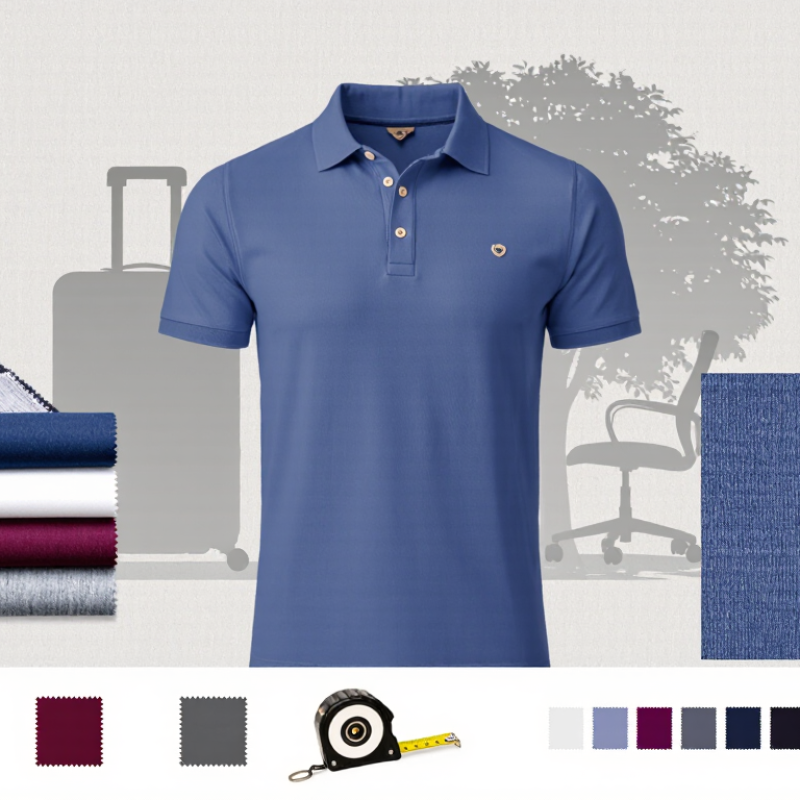
Why Choose Stretch Pique Polo for Global Sourcing?

Stretch Pique Defined: Knit Structure, Fiber Blend, and Recovery

Stretch pique is a knitted fabric with raised, textured columns on its surface. Its structure creates airflow, shape, and a more polished appearance than basic jersey. The small gaps between stitches also help reduce cling during active wear. In production, this texture can hide minor wrinkles and support consistent color appearance. I have found that fabric weight matters greatly.

Small detail.

The fiber blend controls softness, strength, and stretch behavior. Cotton adds breathability and a natural hand feel. Polyester improves durability, drying speed, and color retention. Elastane provides flexibility, but excessive amounts may reduce long-term stability. Recovery describes how quickly the fabric returns after stretching. Poor recovery can leave a collar loose or a body panel wavy. Do not trust appearance alone. Request test reports and sample measurements after repeated washing. International sourcing teams should compare results using recognized textile testing methods.

Tips: Ask for the knit composition and fabric weight. Request a swatch before placing bulk orders. Stretch the fabric across the chest and collar areas. Measure recovery after several extension cycles. Check shrinkage after laundering. Discuss acceptable tolerances clearly. Keep records.

One weakness remains. Stretch pique may feel firm. A softer blend can lose structure faster. This trade-off deserves careful review. Weather, washing habits, and target price should influence the final specification.

Fiber Strategy: Polyester Reached 57% of Global Output in 2023 (Textile Exchange)

Why Choose Stretch Pique Polo for Global Sourcing?

Fiber Strategy: Polyester Reached 57% of Global Output in 2023 (Textile Exchange)

Stretch pique polo fabric fits demanding global programs because it balances structure, comfort, and production efficiency. Its textured surface hides minor creasing. Polyester also offers strong color retention and quick drying. Textile Exchange reported that polyester represented 57% of global fiber production in 2023. Total fiber output reached about 124 million tonnes. This scale supports broad supplier access and more predictable material planning.

However, scale is not the same as sustainability. Many stretch polos combine polyester with elastane. That blend can complicate recycling and fiber separation. Textile Exchange’s Materials Market Report 2024 also highlights continued dependence on fossil-based polyester. A sourcing team should not treat recycled content as an automatic solution. Certification, transaction records, and test results still require review. My practical concern is simple: a lower-impact claim means little without traceable evidence.

Tips: Specify fabric weight, stretch recovery, colorfastness, and pilling performance before sampling. Request fiber percentages by component, not only a general “recycled” statement. Test polo collars and cuffs after repeated washing. Small failures become expensive across multiple markets. Where possible, compare mechanically finished polyester with elastane blends. The cheaper option may lose shape sooner. Sourcing decisions should include wear tests, production capacity, and end-of-life limitations.

Why Choose Stretch Pique Polo for Global Sourcing? - Fiber Strategy: Polyester Reached 57% of Global Output in 2023 (Textile Exchange)
A data-led sourcing framework for evaluating stretch pique polo materials, performance requirements, and quality-control priorities.
Data Dimension Verified Data / Requirement Why It Matters for Stretch Pique Polo Global Sourcing Application
Fiber-Market Context
Global fiber production, 2023 Approximately 124 million tonnes Provides the market scale behind polyester-based sourcing decisions. Polyester is supported by a large global manufacturing ecosystem, which can improve material availability and sourcing flexibility.
Polyester share of global fiber production, 2023 57% Polyester was the largest individual fiber category reported for 2023. Stretch pique programs can generally access a broad range of polyester yarns, finishes, colors, and performance constructions across sourcing regions.
Approximate polyester output derived from reported totals About 70.7 million tonnes Calculated as 124 million tonnes × 57%; the figure is an estimate rather than a separately reported total. Use this calculation as market context only; confirm actual yarn availability, lead time, and minimum order quantity with each qualified supplier.
Cotton share of global fiber production, 2023 19% Cotton remains a major fiber category and offers a different hand feel and moisture-absorption profile from polyester. Compare polyester-rich, cotton-rich, and blended pique constructions through wear trials rather than selecting by fiber share alone.
Stretch Pique Product Strategy
Stretch source Elastane blend or engineered mechanical stretch Stretch can improve comfort, movement, and garment recovery, but the result depends on yarn, knit structure, finishing, and garment construction. State the stretch direction, extension requirement, recovery requirement, and test method in the technical specification. Do not rely on the word “stretch” alone.
Typical performance priorities Shape retention, pilling resistance, colorfastness, dimensional stability, and moisture management Pique texture and stretch components can create different risks in appearance, fit, and laundering performance. Approve the fabric only after laboratory testing and sample laundering under the intended care instructions.
Moisture-management claim Must be supported by a defined test method Fiber content alone does not prove wicking or quick-drying performance. Request the test method, conditioning requirements, test result, and acceptance limit before using performance claims in product documentation.
Recommended Quality-Control Data
Dimensional change after laundering Record length, width, and appearance change after the agreed wash cycle Stretch pique may change in fit or surface appearance if heat, tension, and laundering conditions are not controlled. Use ISO 6330 for domestic washing and ISO 5077 for dimensional-change measurement, with buyer-defined acceptance limits.
Pilling resistance Report grade and test conditions Surface friction, yarn characteristics, knit construction, and finishing can influence pilling. Use ISO 12945-2 or another agreed method and compare results against a signed reference sample.
Colorfastness to laundering Assess color change and staining Dark, bright, and contrasting colorways may present different wash-performance risks. Use ISO 105-C06 or the buyer’s specified equivalent and test the actual production colorway.
Abrasion resistance Report cycles and visible fabric change Repeated wear can affect the pique surface, especially in high-contact areas. Use ISO 12947-2 or another agreed method; define the endpoint and acceptance level before bulk production.
Fiber and material verification Confirm actual composition against the approved specification Fiber percentages affect care instructions, performance expectations, and sustainability claims. Verify composition through an accredited laboratory or an agreed test method, particularly when elastane or recycled content is specified.
Sourcing Decision Summary
Best reason to consider polyester-rich stretch pique Large global supply base plus adaptable performance engineering Polyester can be engineered for different hand feels, weights, colors, finishes, and stretch constructions. Choose it when the required performance, cost, availability, and verified quality results align with the target market.
Main sourcing caution Do not treat fiber share as proof of product performance Final performance is determined by fiber type, yarn, knit structure, finishing, dyeing, sewing, and care conditions. Make decisions using a complete technical pack, laboratory reports, pilot samples, and production-lot inspection data.
Method note: The global production and fiber-share figures are based on Textile Exchange’s Materials Market Report 2024. The approximate polyester output is a calculation from the reported total and share. Testing references identify internationally recognized methods; acceptance limits should be agreed in the buyer’s product specification.

Comfort Engineering: Elastane Content, Airflow, and Four-Way Stretch

Why Choose Stretch Pique Polo for Global Sourcing?

Stretch pique combines a structured surface with controlled flexibility. In fitting reviews, a modest elastane content often improves shoulder movement and reduces pulling across the chest. The exact ratio still needs testing. Too little feels rigid, while too much may weaken shape recovery after repeated washing. A balanced knit should return smoothly, not remain stretched at the elbows. Four-way stretch supports movement in both length and width, which helps active workers and travelers stay comfortable.

Tips: Request fabric swatches and wash-test them before bulk approval. Check stretch, recovery, pilling, color stability, and seam behavior. Measure airflow through the finished garment, not only the raw fabric. A breathable pique should release heat around the back and underarms. Small mesh zones can help, but poor placement may look uneven.

For global sourcing, comfort claims should match measurable specifications. Record elastane percentage, fabric weight, stretch direction, and recovery results in the technical sheet. Suppliers should explain their testing method and production tolerances. This improves comparison across factories. It also limits unpleasant surprises during inspection. Still, laboratory results do not replace wear trials. A polo may pass a stretch test yet feel warm in humid weather. Real use can expose that gap.

Why Choose Stretch Pique Polo for Global Sourcing?

Comfort Engineering: Elastane Content, Airflow, and Four-Way Stretch

Stretch pique balances fiber composition, breathability, and mobility. A moderate elastane level can provide four-way comfort while preserving airflow, making the fabric suitable for polished polo shirts across different climates and sourcing requirements. Air permeability is commonly evaluated under ASTM D737, while stretch performance should be confirmed through laboratory testing for the selected fabric construction.

Global Sourcing Case: WTO Clothing Trade Exceeded $550 Billion in 2023

Why Choose Stretch Pique Polo for Global Sourcing?

The WTO’s World Trade Statistics 2024 reports global clothing trade exceeded $550 billion in 2023. This scale changes how sourcing teams assess a polo shirt. They need stable fabric performance, repeatable production, and clear testing records. Stretch pique can support these goals through cotton-rich comfort and controlled elastane recovery. Still, stretch is not automatically better.

The International Trade Centre’s Trade Map helps compare export values, supplier concentration, and destination demand. These checks matter when buyers plan thousands of shirts across several seasons. A practical sample should measure GSM, dimensional change, spirality, colorfastness, pilling, and stretch recovery after washing. Factories should record lot numbers and test conditions. Small differences become visible at scale. One overlooked shrinkage result can trigger widespread fit complaints. Elastane may also complicate recycling and heat management, so the material choice deserves honest review.

Tips: Request pre-production samples from different fabric lots. Test them after repeated washing, not only before shipment. Compare recovery at the collar, sleeve opening, and side seam. Ask suppliers for recent laboratory reports and corrective-action records. Do not rely on touch alone. It feels useful, but it can mislead.

Supplier Qualification: GSM, Pilling, Colorfastness, MOQ, and Compliance

Why Choose Stretch Pique Polo for Global Sourcing?

Stretch pique polo shirts offer comfort, shape retention, and a polished surface for many markets. Supplier qualification should begin with measurable fabric details, not attractive product photos. Request the exact GSM, fiber blend, stretch percentage, and production tolerance. A 220–240 GSM fabric often balances breathability and durability, but climate and end use still matter. Test physical samples, not only digital specifications.

Tips: Compare samples from three production lots. Check pilling after repeated washing and rubbing. Inspect colorfastness against washing, perspiration, and dry rubbing. Record every result. Small differences become visible under store lighting. A missing test record is a warning sign, even when the sample looks excellent.

MOQ can affect cost, color selection, and inventory risk. Ask whether the MOQ applies per style, color, or total order. Confirm lead times for repeat production.

Compliance checks should cover restricted substances, labeling, social responsibility, and destination-market requirements. Request current third-party reports and verify their scope, test methods, and sample dates.

A report is useful, but it may not represent every shipment. That limitation deserves attention. Some sourcing plans focus heavily on price and overlook shade variation between batches. This is an avoidable weakness. Approve a sealed reference sample, define acceptable tolerances, and inspect bulk goods before shipment.