
China Top 10 Womens Clothing Suppliers?
China has become a major sourcing destination for womens clothing, offering diverse factories, flexible production, and competitive manufacturing costs. This guide examines ten suppliers that may support fashion brands, boutiques, wholesalers, and online retailers. Their capabilities can range from small-batch sampling to large-scale production for seasonal collections.
The evaluation focuses on practical sourcing details. These include minimum order quantities, sample turnaround, fabric selection, size grading, private-label services, quality control, and export experience. Factory location also matters. Guangzhou may offer fast fashion production, while Shenzhen and Hangzhou are known for design, textiles, or strong supplier networks. Details matter.
Reliable suppliers should explain their materials, inspection procedures, lead times, and packaging standards clearly. Buyers should request fabric swatches, measurement charts, production samples, and current compliance documents before placing substantial orders. Product labeling and safety requirements may differ between destination markets, so professional verification remains important.
This list should not be treated as a permanent ranking. Supplier performance can change with management, capacity, labor availability, and order volume. Public information may also be incomplete or carefully presented. That matters. A supplier with attractive photos may still struggle with stitching consistency, color matching, or communication during revisions. Buyers should compare at least three quotations and test a small order before committing to regular production. The strongest partnership usually develops through transparent communication, realistic specifications, and documented quality checks. Mistakes can still happen, even with experienced factories. Careful follow-up reduces their impact.
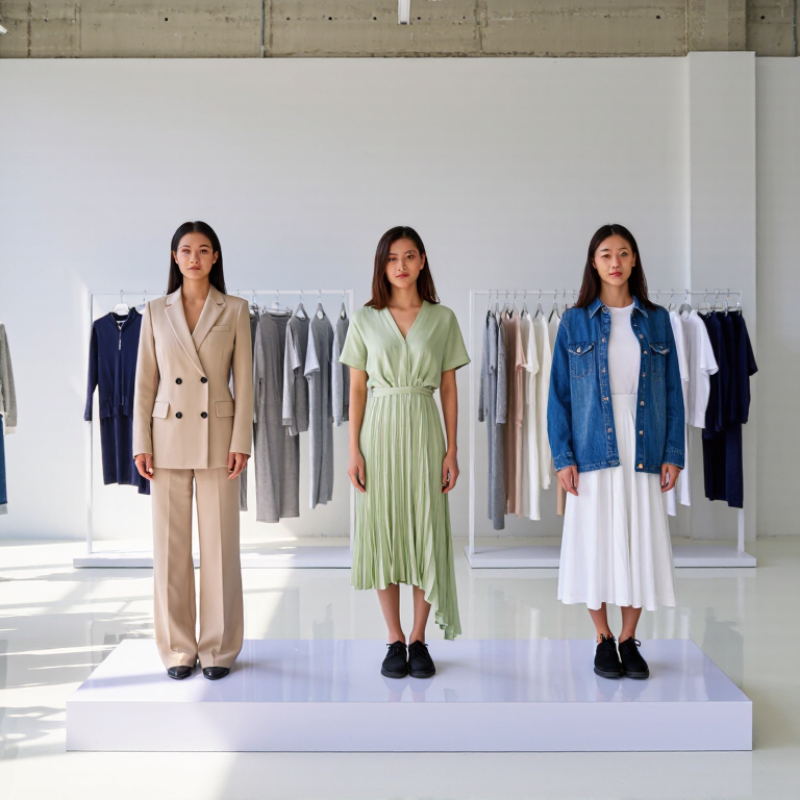
How China’s Women’s Clothing Supplier Market Is Organized
China’s women’s clothing supplier market is organized by capability, location, and order scale. Factory-direct manufacturers usually handle cutting, sewing, finishing, and quality control. OEM suppliers produce designs supplied by buyers. ODM suppliers offer ready-made patterns, fabrics, and seasonal collections. Trading companies coordinate several factories and simplify communication, but they may reduce production transparency.
Regional clusters create different advantages. Zhejiang and Jiangsu support fabric development and medium-to-large production. Guangdong is strong in fast sampling, knitwear, and export services. Fujian and Shandong also contribute activewear, outerwear, and specialized materials. The China National Bureau of Statistics reported RMB 13.02 trillion in online retail sales of physical goods in 2023. That scale encourages suppliers to operate shorter sampling cycles and smaller initial orders.
The top ten suppliers should not be judged by factory size alone. A practical review should examine monthly capacity, minimum order quantity, fabric traceability, audit records, and defect handling. The International Trade Centre’s Trade Map data shows China remains a leading global apparel exporter, confirming its deep production network. However, export strength does not guarantee consistent workmanship. This is the weak spot. A capable supplier should provide pre-production samples, measurable inspection standards, and clear corrective-action records. Buyers also need to verify subcontracting, because production may move between workshops during peak seasons. My experience suggests that the cheapest quotation often hides development fees, fabric substitutions, or slower communication. Supplier ranking is useful, but factory verification matters more.
China Top 10 Womens Clothing Suppliers? - How China’s Women’s Clothing Supplier Market Is Organized
| Rank | Supplier Segment | Major Production Cluster | Typical Women's Apparel | Business Model | Typical MOQ* | Typical Production Lead Time* | Best Fit for Buyers |
|---|---|---|---|---|---|---|---|
| 1 | Full-Service OEM/ODM Factories | Guangdong, Zhejiang, Jiangsu | Dresses, tops, skirts, trousers and coordinated collections | Design development, material sourcing, sampling and bulk production | 300–1,000 units per style | 45–90 days | Importers and private-label programs requiring complete production support |
| 2 | Fast-Fashion and Quick-Turn Factories | Guangzhou, Dongguan and nearby Pearl River Delta cities | Trend-led tops, dresses, partywear and seasonal styles | Small-batch sampling and frequent replenishment | 50–300 units per style | 15–45 days | Online retailers and buyers testing new designs with limited inventory risk |
| 3 | Knitwear and Sweater Manufacturers | Zhejiang, Jiangsu and Guangdong | Cardigans, pullovers, knitted dresses and lightweight sweaters | Yarn selection, knitting, linking, washing and finishing | 200–800 units per style | 45–75 days | Buyers seeking specialized knit construction and seasonal layering products |
| 4 | Denim and Casualwear Factories | Guangdong, Jiangsu and Zhejiang | Jeans, denim skirts, jackets, casual trousers and overshirts | Fabric development, cutting, sewing, washing and garment finishing | 300–1,000 units per style | 50–90 days | Casualwear distributors and labels requiring consistent denim washes |
| 5 | Woven Dress and Blouse Specialists | Hangzhou, Ningbo, Guangzhou and Jiangsu | Chiffon blouses, woven dresses, shirts and occasionwear | Pattern making, draping, embroidery, printing and cut-and-sew production | 200–800 units per style | 35–70 days | Contemporary women's fashion buyers prioritizing silhouette and detail work |
| 6 | Activewear and Performance Apparel Factories | Fujian, Guangdong, Zhejiang and Jiangsu | Leggings, sports bras, training tops, tracksuits and athleisure | Stretch-fabric sourcing, technical patterning, flatlock sewing and testing | 300–1,500 units per style | 45–85 days | Fitness, wellness and athleisure businesses needing functional materials |
| 7 | Lingerie and Intimates Manufacturers | Guangdong, Fujian and Zhejiang | Bras, underwear, shapewear, sleepwear and lace garments | Specialized construction, elastic application, cup molding and fit sampling | 500–2,000 units per style | 50–100 days | Buyers requiring technical fit control and specialized sewing equipment |
| 8 | Small-Batch and Sampling Studios | Guangzhou, Hangzhou, Shenzhen and Shanghai | Prototype garments, capsule collections and made-to-order styles | Low-volume cut-and-sew, pattern correction and sample development | 10–100 units per style | 10–35 days | Start-ups and emerging designers validating products before scaling |
| 9 | Private-Label Trading and Sourcing Offices | Guangzhou, Shenzhen, Shanghai, Ningbo and Hangzhou | Multi-category women's apparel sourced from several factories | Supplier matching, merchandising, quality coordination and export documentation | 100–500 units per style | 30–75 days | Overseas buyers needing one contact for multiple product categories |
| 10 | Sustainable and Certified Apparel Suppliers | Zhejiang, Jiangsu, Guangdong and Shandong | Organic-cotton basics, recycled-fiber garments and lower-impact collections | Material traceability, restricted-substance control, social compliance and production | 300–1,500 units per style | 50–100 days | Buyers requiring documented material and factory compliance programs |
*MOQ and lead-time figures are indicative sourcing benchmarks for standard orders. Actual requirements vary by fabric, construction, customization, certification, season and order quantity.
Related Posts
-
How to Choose the Best Shirts for Women in Global Markets?
-
Why Are Cover Ups Essential in Global Procurement Strategies?
-
Top Trends in Women's Shoes for Every Occasion and Style Choices?
-
Why Are Cover Ups a Must Have for Global Buyers?
-
10 Essential Tips for Choosing the Perfect Womens Pants
-
What Are the 2026 Best Types of Women's Pants?