
Why Are Summer Rompers a Must Have for Global Buyers?
Summer rompers have become a practical choice for global buyers seeking fashionable, versatile, and easy-to-merchandise apparel. Their one-piece design simplifies outfit planning and appeals to customers who value comfort during warm weather. From lightweight cotton for everyday shopping to breathable linen blends for resort collections, fabric selection strongly influences product performance. Buyers can display them in boutiques, online stores, and seasonal campaigns with minimal styling effort. That commercial flexibility matters when product ranges must remain focused. Still, a good appearance is not enough. Suppliers should provide clear fabric details, accurate size charts, care instructions, and consistent product photographs. Small differences in measurements can create large customer complaints.
From a sourcing perspective, summer rompers deserve careful evaluation before bulk purchasing. Buyers should inspect stitching around the waist, neckline, buttons, zippers, and leg openings. These areas often experience repeated movement and washing. Colorfastness and shrinkage testing can also protect customer trust. Practical trials help. A sample worn in warm, active conditions may reveal problems that photographs hide, such as poor breathability or awkward movement. However, not every market wants the same silhouette. Some customers prefer relaxed fits, while others expect structured tailoring. Regional sizing, modesty preferences, climate, and delivery schedules require thoughtful adaptation. Even the best design may need revision. For these reasons, summer rompers offer strong global potential, but reliable results depend on evidence-based selection, transparent supplier communication, and continuous improvement.
What Are Summer Rompers and Why Are They Popular Worldwide?
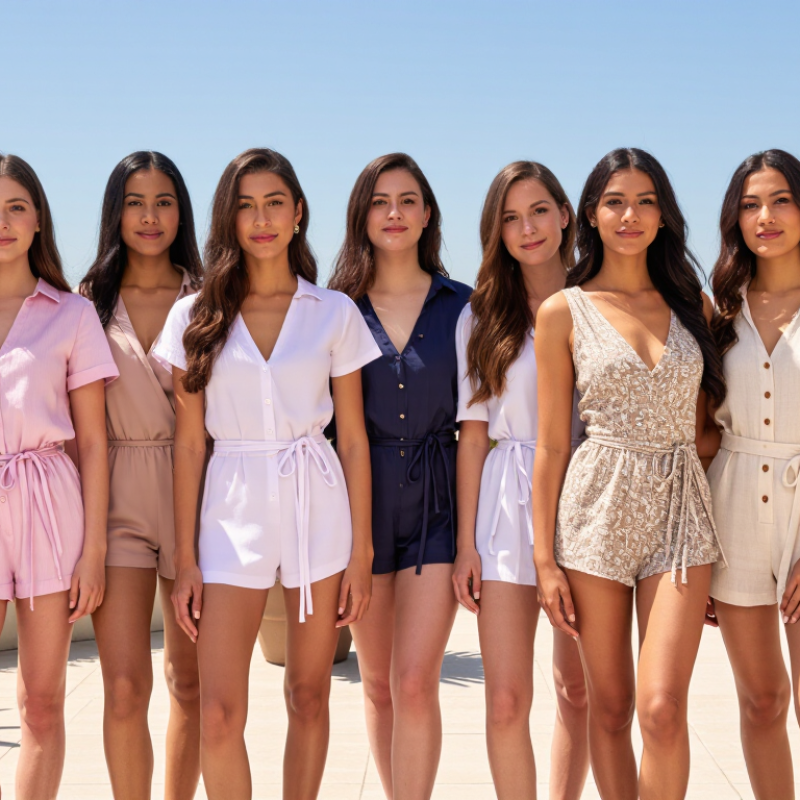
A summer romper is a one-piece garment that combines a top with shorts. Think of it as an easy outfit with fewer pieces to coordinate. It may include short sleeves, adjustable straps, a waist tie, or practical pockets. Unlike a dress, it gives more coverage between the legs while keeping a relaxed, lightweight shape. Cotton, linen blends, and soft viscose are common fabric choices for warm weather. Breathable material matters in humid cities. A buyer should also check fabric weight, stitching, shrinkage, and colorfastness before placing a large order.
Rompers are popular worldwide because they fit many daily situations. Customers can wear them for shopping, travel, casual offices, or outdoor gatherings. Their simple shape helps retailers serve shoppers who want comfort without losing a polished appearance. Online buyers often value clear measurements, adjustable details, and photos showing front, side, and back views. One small sizing mistake can create high return rates. I have found that a stylish sample may still feel uncomfortable after several hours of movement. This is an easy detail to overlook. Cultural preferences also differ; some markets prefer longer shorts, higher necklines, or looser waists. Seasonal colors and local climate should guide purchasing decisions, not just social media attention.
Why Are Summer Rompers a Must Have for Global Buyers? – What Are Summer Rompers and Why Are They Popular Worldwide?
| Data Dimension | Typical Information | Why It Matters to Global Buyers |
|---|---|---|
| Garment Definition | One-piece design combining a top and shorts; commonly available in sleeveless, short-sleeve, halter, wrap, and adjustable-strap styles. | Creates a complete outfit with fewer separate pieces, supporting convenience-led summer collections. |
| Typical Seasonal Use | Most suitable for warm-weather periods, holidays, beachwear, outdoor leisure, and resort wardrobes. | Allows buyers to position the product across several summer lifestyle occasions and geographic markets. |
| Common Fabric Categories | Cotton and cotton blends for softness; linen and linen blends for a naturally textured summer appearance; viscose or rayon for fluid drape; polyester blends for wrinkle resistance and shape retention. | Different fabric categories address varied expectations for breathability, drape, durability, appearance, and care. |
| Indicative Fabric Weight | Lightweight summer fabrics are commonly specified at approximately 80–180 g/m², depending on fiber content and construction. | Lower-weight fabrics can improve warm-weather comfort and reduce shipping weight, while heavier fabrics may offer greater opacity and durability. |
| Silhouette Options | Loose, relaxed, tailored, belted, wide-leg, utility, and fit-and-flare silhouettes are frequently used. | A broad silhouette range helps buyers serve casual, resort, vacation, and occasion-focused customer segments. |
| Functional Details | Pockets, adjustable straps, elasticated waists, drawcords, waist ties, buttons, zippers, and snap closures are common features. | Functional details can improve fit flexibility, usability, product differentiation, and consumer comfort. |
| Packability | Most lightweight rompers can be folded into a compact shape; wrinkle performance depends strongly on fiber content and finishing. | Compact packing supports travel use and may improve carton utilization during international shipment. |
| Sizing Considerations | Fit must account for bust, waist, hip, torso length, rise, and inseam; adjustable or elastic features can increase fit tolerance. | Accurate measurement charts are especially important because a one-piece garment has less separation between top and bottom sizing. |
| Color and Print Flexibility | Solid neutrals, bright seasonal colors, florals, stripes, geometric patterns, and tropical-inspired prints are adaptable design directions. | A balanced color and print assortment can support different regional preferences without changing the basic garment construction. |
| Care Requirements | Care instructions vary by fiber and finish; common requirements include machine washing at moderate temperatures, low-temperature drying, or air drying. | Clear care labeling helps reduce shrinkage, color loss, and customer dissatisfaction across different washing practices. |
| Retail Positioning | Commonly positioned as casualwear, holidaywear, resortwear, beachwear, festivalwear, or lightweight everyday apparel. | Multiple use occasions can help buyers build broader product assortments around one core garment category. |
| Key Quality-Control Points | Check seam strength, stitch consistency, fabric shrinkage, colorfastness, zipper or button performance, pocket placement, and measurement accuracy. | These checks are important for maintaining consistent quality across international orders and reducing returns or claims. |
| Main Buyer Advantages | Outfit convenience, strong seasonal relevance, design versatility, travel suitability, and compatibility with multiple styling accessories. | These characteristics make summer rompers a flexible category for international retail, e-commerce, and seasonal purchasing programs. |
Note: Fabric weights, measurements, care instructions, and performance characteristics should be confirmed through product samples and technical specifications before bulk purchasing.
Related Posts
-

How to Style Dress Jeans for Any Occasion?
-
Top 2T Dresses for Kids What to Look for When Buying?
-

China Top 10 Ralph Lauren Womens Clothing Suppliers?
-

Why Are Cover Ups a Must Have for Global Buyers?
-

Top 10 Ralph Lauren Women's Clothing Must Haves?
-
China Best Kids Dresses Manufacturers for Global Buyers?